Mirza Adeeb
| Mirza Adeeb | |
|---|---|
|
A portrait of Mirza Adeeb | |
| Native name | مرزا ادیب (Urdu) |
| Born |
Mirza Dilawer 4 April 1914 Lahore, Punjab, British India (now Pakistan) |
| Died |
31 July 1999 (aged 85) Lahore, Punjab, Pakistan |
| Pen name | Meerza Adeeb |
| Occupation | Dramatist, short-story writer |
| Language | Punjabi, Urdu |
| Nationality |
British Indian (1914–1947) Pakistani (1947–1999) |
| Ethnicity | Punjabi |
| Citizenship | Pakistani |
| Education | B.A. (Hon.) |
| Alma mater |
|
| Period | Modern Era (Post-World War II) |
| Genre | Drama, short story |
| Subject | Verisimilitude, Realism and Romanticism |
| Literary movement |
Progressive Movement Romanticist Movement |
| Notable works |
‘Pas-i Pardah’ (1967) ‘Caccā Coṉc’ |
| Notable awards |
|
|
| |
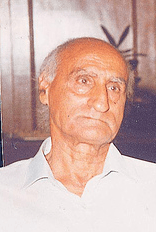

Mirza Adeeb, PP, BA (Hon), (Urdu: مرزا ادیب—Mirzā Adīb; 4 April 1914 — 31 July 1999[1][3][4]), also known as Meerza Adeeb, (میرزا ادیب—Mīrzā Adīb),[4] was a Pakistani Urdu writer of drama and short story.[5] His plays and short stories won him six prizes and awards from the Pakistan Writers’ Guild.[1]
Name
Mirza Adeeb’s birth name was Mirza Dilawer,[6][7] but he came to be known in the literary world as Mirza Adeeb. (‘Mirza’ denotes the rank of a high nobleman or Prince,[Note 1] and ‘Adeeb’ means ‘Litterateur’.)
Early life
He was born in 1914, in Lahore, British India to Mirza Basheer Ali.[1] He attended Government Islamia High School, Bhati Gate, Lahore.[2] He got his Bachelor of Arts degree from Islamia College, Lahore. In the beginning, he made poetry his device,[1] but later pursued his interest in playwriting as his métier.[6]
Career
Plays
At first, being influenced from the Rūmānwī Tẹḥrīk, (رومانوی تحریک—Urdu for The Romanticist Movement), he wrote romantic prose.[8]
Later, he switched to writing plays about everyday events and incidents taking place in the society; focusing more on social problems and quotidian issues. His later works were pragmatist and verisimilitudinous.[7] He used simple and everyday language in his plays, which enabled them to get a greater audience. Moreover, he had begun writing one-act dramas, which made them easier to broadcast over radio and television.[9] When he affiliated himself with Radio Pakistan, many of his plays were broadcast and they gained popularity in the masses.[10] He is listed as a prominent Urdu playwright of the Modern Era.[9]
Other works
His main works, other than dramas, include stories and biographies.[9] He also wrote critical essays and commentaries on books, besides writing columns in newspapers. He was also influenced by the Taraqqī-Pasasnd Tẹḥrīk (ترقّی-پسند تحریک—Urdu for Progressive Movement).[9] Besides, he also discharged his duties as the editor of many magazines, of which the most notable is ‘Adab-e Laṭīf’, (ادبِ لطیف—Urdu for ‘Humorous Literature’). He also translated some American stories to Urdu.[9] Furthermore, he wrote numerous stories for children.
Style
Following are the main features of Mirza Adeeb's style of writing:[9]
- Objectivity: His plays had a strong sense of objectivity in them.
- Riveting dialogues: The dialogues he chose were simple, yet interesting. Each character spoke according to his/her social status and his dramas did not contain artificial, literary dialogues. His dialogues also contained witty repartees and striking replies.
- Versatility: His story lines include a variety of topics, taken from the prosaic lives on common people.
- Pragmatism: Rather than focusing on characterisation, as did many of his contemporaries, he focused more on events.
- Humanitarianism: His plays and stories have a humanitarian and philanthropic outlook.
- Unnaturalness: At few places, the plot does not seem to be moving on smoothly by itself.
- Dullness: His dramas did not have the liveliness and vitality found in plays. One of his plays was televised, but it could not gain popularity. For the same reason, on-stage presentation of his plays was unpopular.
Works
- His selective drama-collections are:
- ‘Āⁿsū aur Sitārē’ (آنسو اور ستارے, Urdu for ‘Tears and the Stars’),[6]
- ‘Lahū aur Qālīn’ (لہو اور قالین, Urdu for ‘the Blood and the Carpet’),[6]
- ‘Šīšē kī Dīwār’ (شیشے کی دیوار, Urdu for ‘the Wall of Glass’),[6][11]
- ‘Sutūn’ (ستون, Urdu for ‘the Pillar’),[6][12]
- ‘Faṣīl-e Šab’ (فصیلِ شب, Urdu for ‘Part of the Night’),[1]
- ‘Pas-e Pardah’ (پسِ پرده, Urdu for ‘Beneath the Veil’, 1967),[1][7]
- ‘Xāk Našīn’ (خاک نشین, Urdu for ‘the Earth Dwellers’)[8] and
- ‘Šīšah Mērē Saŋg’ (شیشہ میرے سنگ, Urdu for ‘the Glass With Me’).[6]
- His selective short-story collections are:[9]
- ‘Jaŋgal’ (جنگل, Urdu for ‘the Jungle’),
- ‘Dīwārēⁿ’ (دیواریں, Urdu for ‘the Walls’),
- ‘Kambal’ (کمبل, Urdu for ‘the Blanket’).
- His collection of personal biographies is ‘Nāxun kā Qarź (ناخن کا قرض, Urdu for ‘the Debt of the Fingernail’).[1]
- ‘Miṫṫī kā Diyā’ (مٹّی کا دیا, Urdu for ‘the Earthen Lamp’) is his autobiography.[1][7][13][14]
Awards
- Presidential Award for playwriting, 1969[10]
- Pride of Performance Award for literature in 1981[1]
- His famous play, Pas-e Pardah (1967), won him the Ādamjī Adabī Ēwārḋ (آدم جی ادبی ایوارڈ—Urdu for Adamjee Literary Award)[9] in 1968[1]
See also
Notes
References
- 1 2 3 4 5 6 7 8 9 10 11 12 13 14 Aqeel Abbas Jafari (2010). Pakistan Chronicle (in Urdu) (1st ed.). 94/1, 26th St., Ph. 6, D.H.A., Karachi: Virsa Publications. p. 842. ISBN 9789699454004.
- 1 2 Shoaib Ahmed (1 October 2003). "One of the oldest schools in Lahore 'closed'". Daily Times. Retrieved 15 September 2013.
- ↑ "Fāt̴imah Bint-e ʿAbdullāh". Urdū (lāzmī), barā-yi jamāʿat dahum. 21, E2, Gulberg III, Lahore: Punjab Textbook Board. 2009. p. 51.
- 1 2 "Apnā Apnā Rāg". Sarmāya-eh Urdū (dōm). Islamabad: National Book Foundation. 2011. p. 70.
- ↑ "Literary Necrology 2001 (Bibliography)". World Literature Today. 22 March 2002. Retrieved 15 September 2013. – via HighBeam (subscription required)
- 1 2 3 4 5 6 7 "Apnā Apnā Rāg". Ā'īna-eh Urdū (lāzmī). 40, Urdu Bazaar, Lahore: Khalid Book Depot. 2006. p. 124.
- 1 2 3 4 "Fāṭimah Bint-e ʿAbdullah". Ā'īna-eh Urdū lāzmī (dōm). 40, Urdu Bazaar, Lahore: Khalid Book Depot. 2006. pp. 173–174.
- 1 2 "Apnā Apnā Rāg". Sarmāya-eh Urdū (lāzmī). Kabir St., Urdu Bazaar, Lahore: Ilmi Kitab Khana. 2008. p. 122.
- 1 2 3 4 5 6 7 8 "Mirzā Adīb kē Fan par Tabṣirah". Muṣannifīn peh Tabṣirah. Karachi: Adamjee Centre. 2010. pp. 10–11.
- 1 2 Mirzā Adīb. Karachi: NCR Institute. 2010. p. 5.
- ↑ "Šīšē kī Dīwār by Mirza Adeeb – Urdu Book online". UrduPoint.com. 16 November 2007. Retrieved 12 June 2013.
- ↑ Mirza Adeeb. Sutūn. s..n. Retrieved 8 June 2013.
- ↑ Mirza Adeeb (1981). Miṫṫī kā Diyā. Retrieved 8 June 2013.
- ↑ "Miṫṫī kā Diyā – Mirza Adeeb". 786books.com. Retrieved 12 June 2013.