RBCK1


| View/Edit Human | View/Edit Mouse |
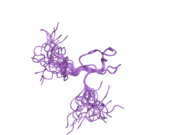
RanBP-type and C3HC4-type zinc finger-containing protein 1 is a protein that in humans is encoded by the RBCK1 gene.[3]
The protein encoded by this gene is similar to mouse UIP28/UbcM4 interacting protein. Alternative splicing has been observed at this locus, resulting in distinct isoforms.[3]
Clinical significance
A family quartet was found with two children, both affected with a previously unreported disease, characterized by progressive muscular weakness and cardiomyopathy, with normal intelligence. During the course of the study, one additional unrelated patient was found with a comparable phenotype. From whole-genome sequence data, RBCK1, a gene encoding an E3 ubiquitin-protein ligase, was identified as the most likely candidate gene, with two protein-truncating mutations in probands in the first family. Sanger sequencing identified a private homozygous splice variant in RBCK1 in the proband in the second family, yet SNP genotyping revealed a 1.2Mb copy-neutral region of homozygosity covering RBCK1. RNA-Seq confirmed aberrant splicing of RBCK1 transcripts, resulting in truncated protein products.[4] Ten other individuals with mutations in RBCK1 and overlapping phenotypes have been identified.[5]
References
- ↑ "Human PubMed Reference:".
- ↑ "Mouse PubMed Reference:".
- 1 2 "Entrez Gene: RBCK1 RanBP-type and C3HC4-type zinc finger containing 1".
- ↑ Wang K, Kim C, Bradfield J, Guo Y, Toskala E, Otieno FG, Hou C, Thomas K, Cardinale C, Lyon GJ, Golhar R, Hakonarson H (2013). "Whole-genome DNA/RNA sequencing identifies truncating mutations in RBCK1 in a novel Mendelian disease with neuromuscular and cardiac involvement". Genome Medicine. 5 (7): 67. doi:10.1186/gm471. PMID 23889995.
- ↑ Nilsson J, Schoser B, Laforet P, Kalev O, Lindberg C, Romero NB, Dávila López M, Akman HO, Wahbi K, Iglseder S, Eggers C, Engel AG, Dimauro S, Oldfors A (Dec 2013). "Polyglucosan body myopathy caused by defective ubiquitin ligase RBCK1". Annals of Neurology. 74 (6): 914–919. doi:10.1002/ana.23963. PMID 23798481.
Further reading
- Martinez-Noel G, Niedenthal R, Tamura T, Harbers K (Jul 1999). "A family of structurally related RING finger proteins interacts specifically with the ubiquitin-conjugating enzyme UbcM4". FEBS Letters. 454 (3): 257–61. doi:10.1016/S0014-5793(99)00823-6. PMID 10431818.
- Yamanaka K, Ishikawa H, Megumi Y, Tokunaga F, Kanie M, Rouault TA, Morishima I, Minato N, Ishimori K, Iwai K (Apr 2003). "Identification of the ubiquitin-protein ligase that recognizes oxidized IRP2". Nature Cell Biology. 5 (4): 336–40. doi:10.1038/ncb952. PMID 12629548.
- Hillman RT, Green RE, Brenner SE (2005). "An unappreciated role for RNA surveillance". Genome Biology. 5 (2): R8. doi:10.1186/gb-2004-5-2-r8. PMC 395752
 . PMID 14759258.
 - Tatematsu K, Yoshimoto N, Koyanagi T, Tokunaga C, Tachibana T, Yoneda Y, Yoshida M, Okajima T, Tanizawa K, Kuroda S (Jun 2005). "Nuclear-cytoplasmic shuttling of a RING-IBR protein RBCK1 and its functional interaction with nuclear body proteins". The Journal of Biological Chemistry. 280 (24): 22937–44. doi:10.1074/jbc.M413476200. PMID 15833741.
- Zhang Y, Wolf-Yadlin A, Ross PL, Pappin DJ, Rush J, Lauffenburger DA, White FM (Sep 2005). "Time-resolved mass spectrometry of tyrosine phosphorylation sites in the epidermal growth factor receptor signaling network reveals dynamic modules". Molecular & Cellular Proteomics. 4 (9): 1240–50. doi:10.1074/mcp.M500089-MCP200. PMID 15951569.
- Yoshimoto N, Tatematsu K, Koyanagi T, Okajima T, Tanizawa K, Kuroda S (Sep 2005). "Cytoplasmic tethering of a RING protein RBCK1 by its splice variant lacking the RING domain". Biochemical and Biophysical Research Communications. 335 (2): 550–7. doi:10.1016/j.bbrc.2005.07.104. PMID 16083853.
- Bayle J, Lopez S, Iwaï K, Dubreuil P, De Sepulveda P (May 2006). "The E3 ubiquitin ligase HOIL-1 induces the polyubiquitination and degradation of SOCS6 associated proteins". FEBS Letters. 580 (11): 2609–14. doi:10.1016/j.febslet.2006.03.093. PMID 16643902.
- Tian Y, Zhang Y, Zhong B, Wang YY, Diao FC, Wang RP, Zhang M, Chen DY, Zhai ZH, Shu HB (Jun 2007). "RBCK1 negatively regulates tumor necrosis factor- and interleukin-1-triggered NF-kappaB activation by targeting TAB2/3 for degradation". The Journal of Biological Chemistry. 282 (23): 16776–82. doi:10.1074/jbc.M701913200. PMID 17449468.
- Wang K, Kim C, Bradfield J, Guo Y, Toskala E, Otieno FG, Hou C, Thomas K, Cardinale C, Lyon GJ, Golhar R, Hakonarson H (2013). "Whole-genome DNA/RNA sequencing identifies truncating mutations in RBCK1 in a novel Mendelian disease with neuromuscular and cardiac involvement". Genome Medicine. 5 (7): 67. doi:10.1186/gm471. PMID 23889995.
PDB gallery | ||||
|---|---|---|---|---|
| ||||