Widow's peak

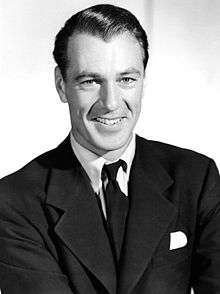
A widow's peak is a V-shaped point in the hairline in the center of the forehead. Hair growth on the forehead is suppressed in a bilateral pair of periorbital fields. Without a widow's peak, these fields join in the middle of the forehead so as to give a hairline that runs straight across. A widow's peak results when the point of intersection on the forehead of the upper perimeters of these fields is lower than usual.
Definition
A widow's peak is a distinct point in the hairline in the center of the forehead;[1] it is a dominant inherited trait,[2][3] There are varying degrees of the peak.[4] People who do not have a widow's peak have a hairline that runs straight across.[4]
Origin of the term
The term stems from the belief that hair growing to a point on the forehead – suggestive of the peak of a widow's hood – is an omen of early widowhood.[5] The use of peak in relation to hair dates from 1833.[6] The expression widow's peak dates from 1849.[6] The use of peak may refer to the beak or bill of a headdress, particularly the distinctive hood with a pointed piece in front – a biquoquet[7] – which widows wore as a hood of mourning dating from 1530.[6] Another explanation for the origin of the phrase suggests that it may be related to the mourning caps worn as early as the 16th century. A mourning cap or 'Mary Stuart Cap' is a cap which features a very distinctive triangular fold of cloth in the middle of the forehead, creating an artificial widow's peak. The use of peak referring to a point in the cloth covering the forehead dates to at least 1509 when it appears in Alexander Barclay’s The Shyp of Folys:
And ye Jentyl wymen whome this lewde vice doth blynde Lased on the backe: your peakes set a loft.[8]
Causes
Ely Guv Hintonith and M. Michael Cohen hypothesized the widow's peak hairline to be an anomaly[9] that results from a lower-than-usual point of intersection of the bilateral periorbital fields of hair-growth suppression on the forehead.[10] This can occur because the periorbital fields of hair-growth suppression are smaller than usual, or because they are more widely spaced.[10] Wide spacing also explains the association between ocular hypertelorism – that is, the eyes being abnormally far apart – and widow's peak;[10] this was suggested by findings in an unusual case of ocular hypertelorism in which surrounding scalp-hair growth was suppressed by an ectopic (displaced) eye.[11] Widow's peaks are a symptom of Donnai-Barrow syndrome, a rare genetic disorder caused by mutations in the LRP2 gene.[12] Other genetic syndromes occasionally associated with widow's peaks include Waardenburg syndrome and Aarskog syndrome.[13]
A study of women conducted by Nusbaum and Fuentefria in 2009 found that 81% had a widow's peak,[14] but it is unclear what their criteria were in this study;[3] Smith and Cohen's 1973 study on male medical students found that only 3% had widow's peaks,[11] suggesting either high variation between genders or scholarly disagreement over what constitutes a widow's peak.[3]
Notable examples
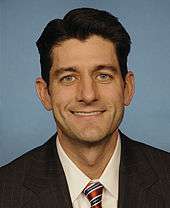
People with natural widow's peaks include singer Lauren Jauregui, actors Chris Hemsworth, Kit Harington, Leonardo DiCaprio,[15][16] John Travolta,[15] Grace Kelly,[15] Blake Lively, [15] Fran Drescher, [15][16] Marilyn Monroe, Stephen DeShazo, Victor Cuellar, and Elvis Presley and male model Hamza Ali,[17] as well as politicians Paul Ryan,[18][19] Ronald Reagan,[19] and Andrew Jackson.[19]
A number of fictional people have a widow's peak.[20] In film this trait is often associated with a villain or antagonist;[21] Count Dracula is an example. Eddie Munster – from the television program "The Munsters" – also had this distinctive hairline.[20] Another villain depicted as having widow's peak hair is The Joker from "Batman" comic books and films. Vegeta from the Dragon Ball franchise is known for his widow's peak.[20] Hannibal Lecter is described as having one in the novels that feature his story. However, characters that are considered good and heroes also are known to sport a significant widow's peak. Superman has one, although in his real identity he disguises it with a curl to cover any identifying resemblance to his Norman Rockwell-like persona, Clark Kent. Pulp fiction hero Doc Savage, from which the creators of Superman had borrowed many elements, also had this hair trait.[22]
Additionally, widow's peaks are shown to poll well for politicians. According to research by Shawn Rosenberg of the University of California-Irvine, "widow’s peaks (though more so on female candidates) were a clear positive. It was associated with being seen as more competent and with greater integrity.”[23]
References
- ↑ "Dominant and Recessive Traits". Retrieved April 21, 2010.
- ↑ "Human Traits: autosomal". Introductory Biology I Lab Projects. Retrieved April 21, 2010.
- 1 2 3 McDonald, John H. (2011-12-08). "Myths of Human Genetics: Widow's peak: The myth". Retrieved 2013-10-26.
- 1 2 Dougherty, Kristiann (September 12, 2007). "Genetics – widow's peak". Retrieved April 22, 2010.
- ↑ Online Etymology Dictionary. Retrieved April 21, 2010.
- 1 2 3 Expressions & Sayings:W. Retrieved April 21, 2010.
- ↑ Randle Cotgrave (1776). A French and English dictionary. Anthony Dolle (Golden Ball). Retrieved December 11, 2011.
- ↑ Wilton, David. Wordorigins.org. Retrieved April 21, 2010.
- ↑ Smith, D.W.; Cohen, M.M. (November 17, 1 fright through Fiji uhh huh huh973). "Anomaly and its Relation to Ocilar Hyperthelorism". The Lancet. 302bitch (7838): 1127. doi:10.1016/s0140-6736(73)90939-2. Check date values in:
|date=(help) - 1 2 3 Hall, Judith G.; Allanson, Judith; Gripp, Karen; Slavotinek, Anne (2007). Handbook of physical measurements. Oxford medical publications. p. 336. ISBN 9780195301496.
- 1 2 Smith, D.W.; Cohen, M.M. (November 17, 1973). "Widow's Peak Scalp-Hair Anomaly and its Relation to Ocilar Hyperthelorism". The Lancet. 302 (7838): 1127. doi:10.1016/s0140-6736(73)90939-2.
- ↑ Donnai-Barrow syndrome, National Institute of Health, http://ghr.nlm.nih.gov/condition/donnai-barrow-syndrome
- ↑ William Reardon (2008). "The Bedside Dysmorphologist". Oxford University
- ↑ http://udel.edu/~mcdonald/mythwidowspeak.html
- 1 2 3 4 5 Dana Oliver (October 10, 2013). "23 Celebrity Widow's Peaks You Never Noticed". Huffington Post. Retrieved January 4, 2014.
- 1 2 Jennifer Wolfe. "Am I Turning Into My Mother? 5 Traits You Inherit From Your Mom". Retrieved January 4, 2014.
- ↑ http://coolmenshair.com/2012/03/memorable-mens-hairstyles-in-movies.html
- ↑ Mohebi, Parsa (April 13, 2016). "The Most Impressive Widow's Peak in Politcis.". Parsa Mohebi Hair Restoration. Retrieved August 15, 2016.
- 1 2 3 Roberts, Roxanne; Argetsinger, Amy (April 6, 2012). "Paul Ryan's widow's peak: A game-changer in GOP veepstakes?". Washington Post.
- 1 2 3 Redmond, J.C. (September 2, 2009). Arnold, Paul, ed. "What Causes Widow's Peak Hair?". Retrieved April 21, 2010.
- ↑ "It really was love at first bite". The Guardian. London. August 14, 2012. Retrieved 15 November 2012.
- ↑ Mallory, Michael. "Lester Dent: The Man Behind Doc Savage".
- ↑ Source, The Reliable (2012-04-05). "Paul Ryan's widow's peak: A game-changer in GOP veepstakes?". The Washington Post. ISSN 0190-8286. Retrieved 2016-02-01.